


Chapter 1: We Thought English Would Be Enough
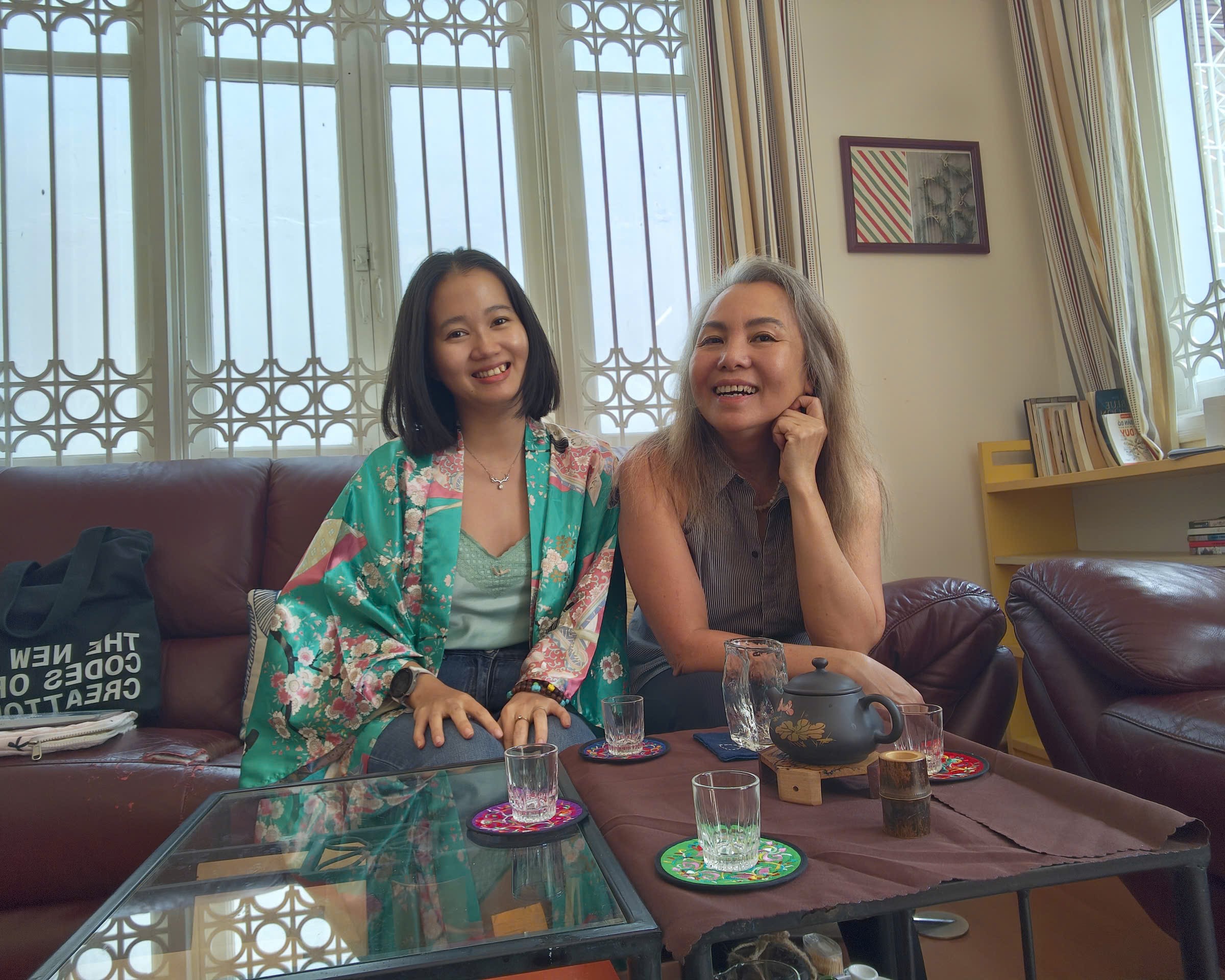
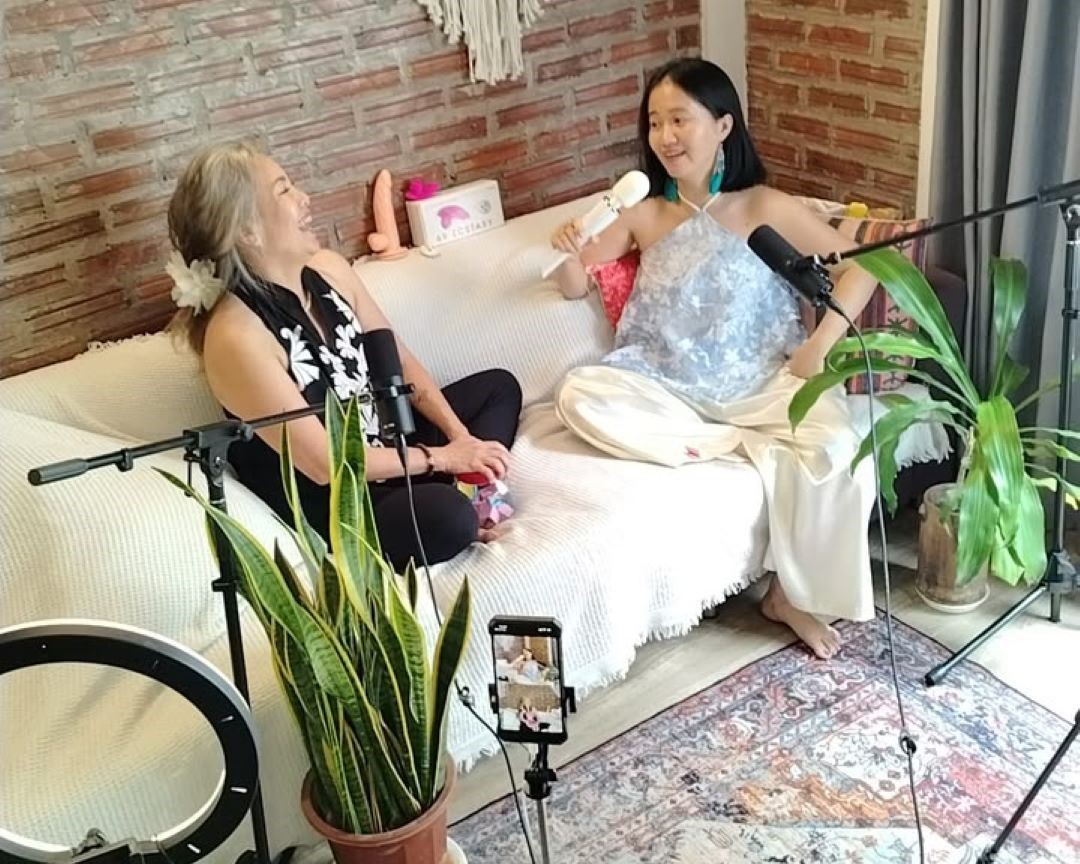
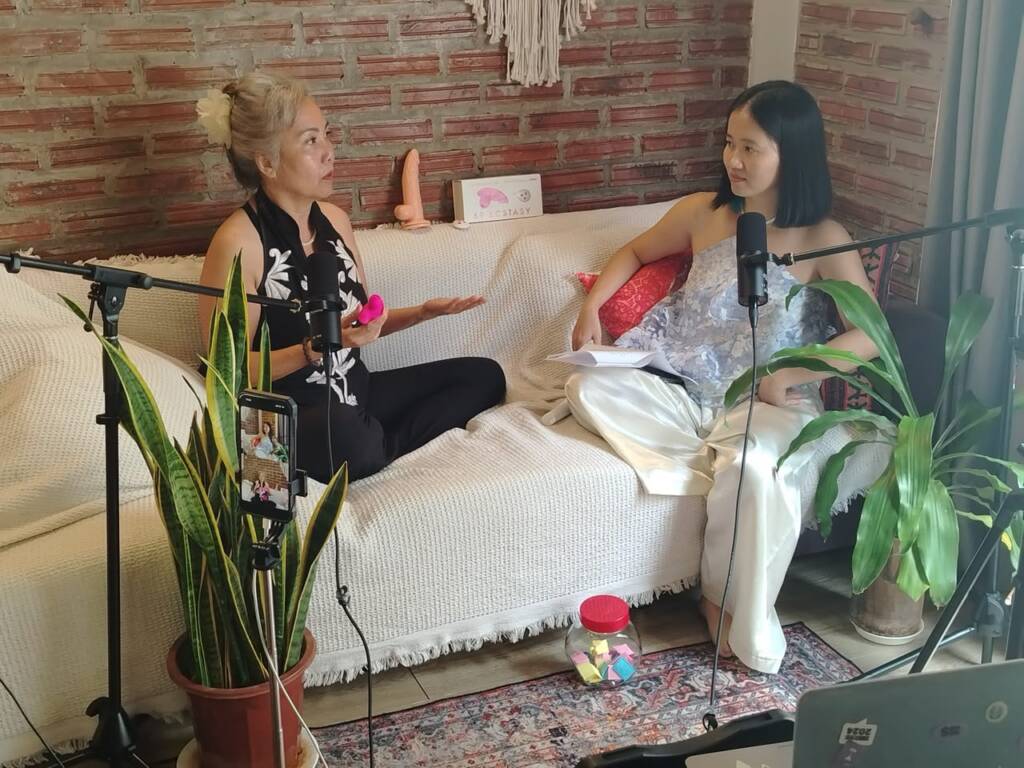
A few weeks ago I sat across from Chị Mai Khôi with two microphones between us, and before we even hit record, she said something that made me put my pen down.
She’s Vietnamese-born, raised in America, married to two white men, and mother to a mixed-race daughter. Thirty years of coaching couples across cultures, and she has lived on every side of the exact gap we were about to spend the next hour talking about. “It took me many years,” she told me, “but I finally understand why two people can love each other completely and still lose each other.” Not a confession. A hard-won conclusion.
I want to be honest about something before I go further. When I started working with Vietnamese women married to foreign men, I believed that if two people can both speak English, communication won’t be the real problem. It makes sense on paper. If two people can talk for hours over dinner, travel together, text all day, laugh at the same memes, surely language isn’t what’s breaking them.
But it’s not true. Because the couples who come to me rarely have a language problem. Most of them speak English just fine. Some of them talk more than Vietnamese couples do. And still, I hear the same two sentences, a few days apart, from two people who love each other.
From her: “I don’t think he really understands me.”
From him: “I honestly don’t know what she wants anymore.”
Every time, I ask myself the same question. If two people are speaking the same language, what exactly is getting lost?
Chị Mai Khôi gave me an answer during our conversation that I haven’t been able to put down since. She said, “Every language carries hundreds of years of stories.”
At first I thought it was just a nice sentence for a podcast. Then I sat with it, and it explained something I’d been circling for years without naming: language was never just words. It’s childhood. Family. Humor. Shame. All the rules we grew up believing were simply “normal,” so normal we never noticed we were taught them.
So when two people speak English to each other, they usually assume they’re speaking the same language. They’re not. They’re speaking English through two completely different worlds.
Take a word as ordinary as family. For one person, family means a husband, a wife, and their children, a closed circle. For another, family includes grandparents, aunts, cousins, and a decision you make on a Tuesday that somehow needs to answer to twelve people. Same word. Different universe.
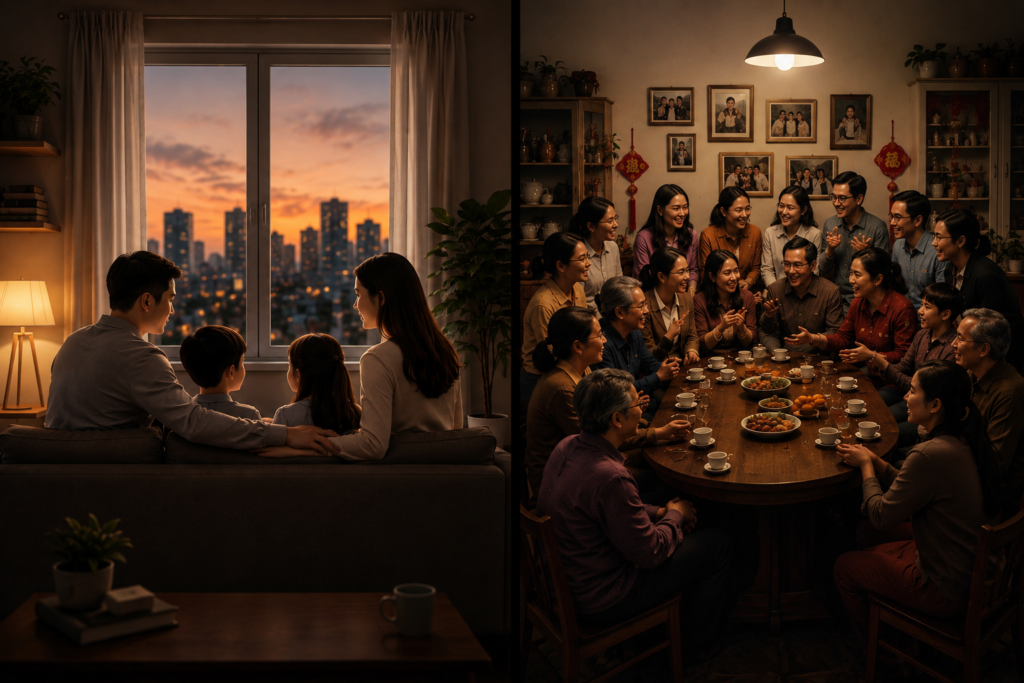
Or take adult. For one person, becoming an adult means finally being independent. For another, it means finally being responsible for everyone else. I’ve watched couples argue about this exact gap without ever knowing that’s what they were arguing about.
I’ve heard so many Western partners say to their Vietnamese wives, gently, meaning it as a gift: “You don’t need anyone’s permission.” They mean freedom. Confidence. But sometimes what she hears is “Stop caring so much about your parents,” or “Why do you let your family control your life?” That is not what he said. It’s what the sentence became once it passed through her dictionary. And that’s the real work of translation: we don’t translate words, we translate meaning, and meaning is the part nobody teaches you.
Chị Mai Khôi told me a story on the podcast that made me laugh out loud, because I’ve watched it happen so many times I’ve lost count. When she first came back to Vietnam to teach, she taught in English. Her students nodded. They smiled. Everything looked fine. Then she’d ask a follow-up question “what does that word actually mean to you?” and the room would go quiet. Not because they weren’t smart, or their English wasn’t good enough. Because they thought they’d understood.
I’ve done the exact same thing, in rooms far from a classroom. Someone is talking, I lose the thread halfway through, I catch a few familiar words, and I nod and smile and hope the conversation keeps moving not because I understand, but because I don’t want to be the one who slows everyone down, or looks like my English isn’t good enough, or the one needs everything repeated like a child.
It’s about what many of us were raised to do inside a relationship: don’t interrupt, don’t argue, don’t ask too many questions, don’t make anyone uncomfortable, read the room before you speak. These are genuinely beautiful qualities. They make us thoughtful daughters, wives, friends. But inside a mixed marriage, they get lost in translation almost immediately.
She nods, he thinks, great, she agrees. She says “it’s okay” he thinks, problem solved. She goes quiet, he assumes, she needs some space.
And she might actually be thinking, I don’t know how to say this without hurting you, or simply, I’m not sure myself.

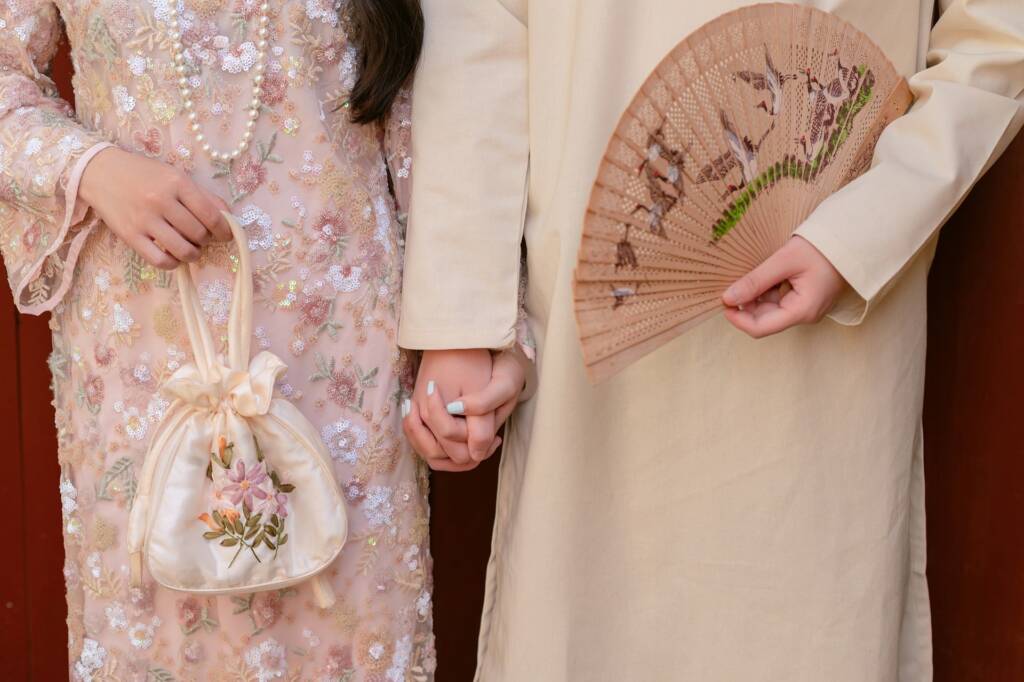
Misunderstanding almost never begins with the big fights. It begins in the tiny, forgettable moments: a nod, a smile, “it’s fine,” “whatever you want.” The sentences are too small to notice, that quietly stack for years, until one person believes she always agrees with me, and the other believes he never really asks what I think. Neither one is lying. They’re reading from two different dictionaries, and nobody ever told them the dictionaries were different.
I think the hardest part is realizing that every language carries an entire way of seeing the world: every joke, every family tradition, every unspoken idea of what love is supposed to look like, hiding underneath completely ordinary conversations.
Which means that when two people fall in love across cultures, they aren’t only translating English and Vietnamese. They’re trying to translate two entirely different childhoods.
And that might be the hardest translation any of us ever attempts.
Where do you start, if this sounds like you? Not with a language app. Start by picking one ordinary word: family, respect, love, adult, and asking your partner what it actually means to them. Not the definition. The feeling underneath it. You may be surprised how long you’ve been married to a stranger’s dictionary.
For more details about Minh Ngoc’s services and for booking an appointment follow the link below.